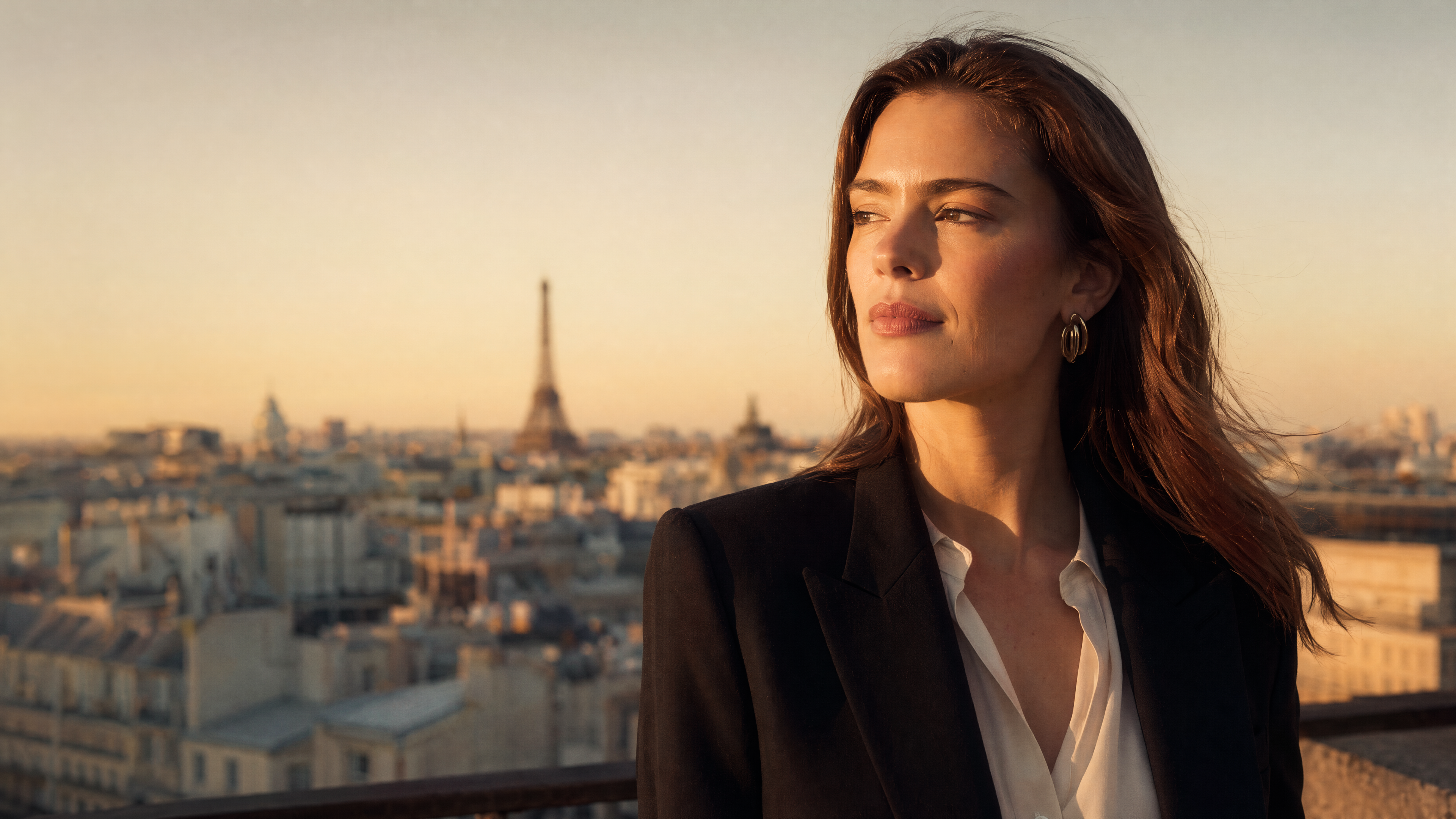
Type "AI headshot" into any search bar and you get a wall of the same image: a person against a soft gray wall, lit evenly, smiling the careful smile of someone about to be added to a company directory. It is competent. It is also forgettable. An editorial portrait is a different animal entirely, and the gap between the two is the gap between a passport photo and a magazine cover.
The headshot is a document
A headshot exists to identify you. Its job is clarity: neutral background, even light, a flattering but honest likeness. Nothing in the frame competes with your face. That restraint is the point — a headshot that draws attention to its setting has failed at its one task.
This is why headshots converge. There are only so many ways to photograph a face for identification before you are simply repeating the formula. The formula works. It is also why one headshot looks much like another.
The editorial portrait is a point of view
An editorial portrait is not trying to identify you. It is trying to say something about you — or about a mood, a season, a world you might belong to. The setting matters. The light is chosen for drama or softness, not neutrality. Wardrobe, pose, and framing all carry intent.
Where a headshot subtracts everything that isn't your face, an editorial portrait composes a scene around it. You are still the subject, but now you are a subject with context: a rooftop at dusk, a sunlit studio, a rain-streaked window. The portrait has an opinion.
Same face, different intent
The fascinating part is that both can start from the identical reference photo. The same face, fed to the same model, becomes a directory headshot or a cover-worthy portrait depending entirely on the direction it's given — the framing, the setting, the styling, the mood.
That direction is the whole craft. It's the difference between "photo of a person" and "photo of a person who looks like they belong on the masthead of a fashion quarterly."
When you want which
Reach for a headshot when the context is functional: a LinkedIn profile, a conference badge, a team page where consistency matters more than character. You want to be recognized, not interpreted.
Reach for an editorial portrait when you want the image to do more than identify — a personal brand, a creative profile, a portfolio, a gift, or simply the pleasure of seeing yourself rendered with intent. Editorial is for when the picture is the point, not the paperwork.
How LuxShot thinks about it
LuxShot is built for the editorial end of that spectrum. You don't write prompts; you direct — choosing framing, setting, styling, mood, pose, and look, the same decisions a photographer and stylist would make on a real shoot. The model handles the rest.
The result is a portrait with a point of view, generated from your own face references. It can still be clean and professional when you want it to be — but it will never be just a document. Direct a shoot and see the difference for yourself.